
Affiliate Disclosure
Affiliate Disclosure: Please note that this article contains affiliate links. This means that if you click through the links and make a purchase, I may earn a small commission from that purchase at no extra cost to you. To learn more about affiliate marketing and how I use the income from affiliate inks, check out my affiliate page.
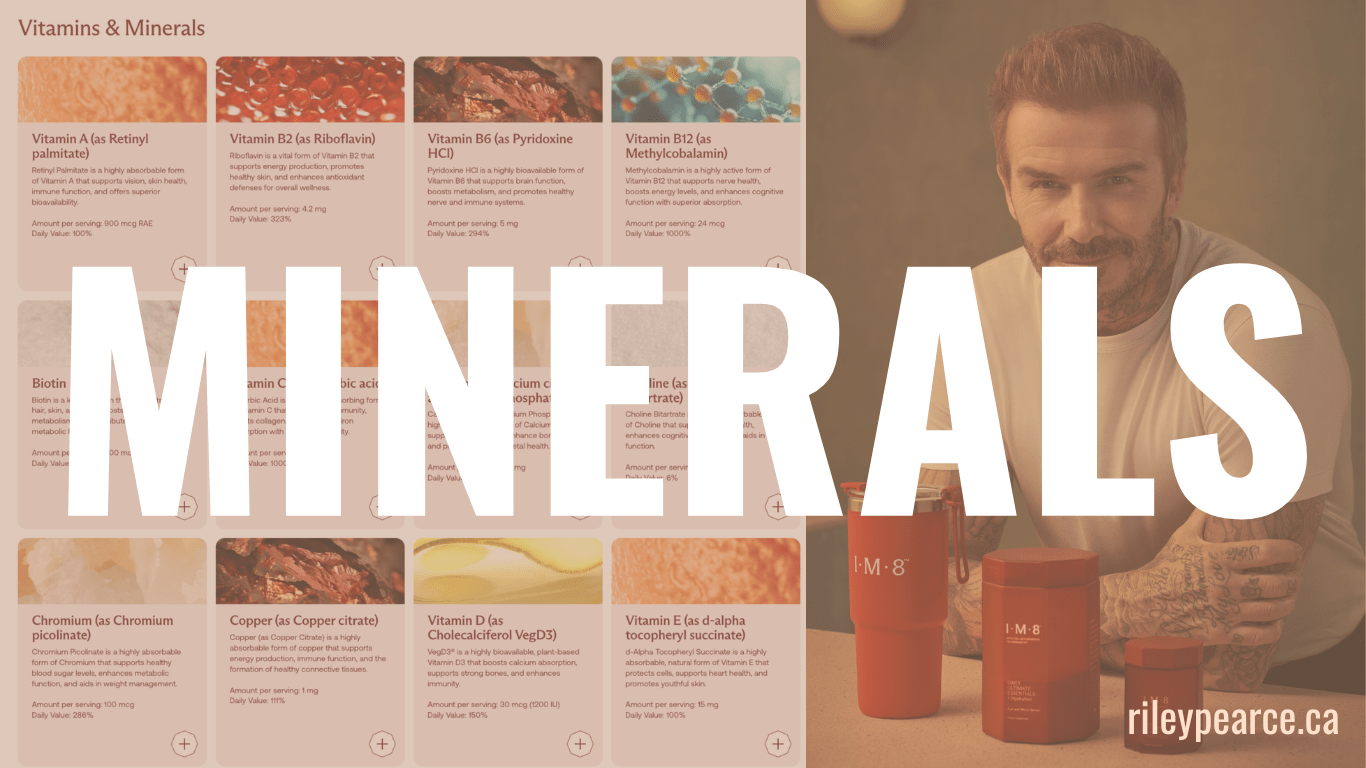
IM8 is the new all-in-one supplement powder with an impressive ingredient list to ensure you feel your best. In part 1 of this series, I covered the vitamins listed in IM8’s Ultimate Daily Essentials ingredients list. In part 2, I will follow the same format and share all of the minerals on the list, why we need them for optimal health, how much we need per day, and where you can find these minerals in whole food sources.
What are minerals?
Minerals are micronutrients that your body needs to support a myriad of functions and processes that help maintain a healthy body. You may actually recognize some of these minerals, as things like calcium are often talked about during conversations about nutrition and healthy aging. Some of you may even recognize them straight from the periodic table!
You’ll also find some of the most important minerals listed on your nutrition labels, like iron and potassium, as these minerals are critical for transporting oxygen in our red blood cells and maintaining healthy hydration levels, respectively.
So, let’s get into the different minerals listed in their ingredients list.
| Vitamins | Minerals |
| Vitamin A (as Retinyl palmitate) | Calcium (as Calcium citrate and Calcium phosphate) |
| Vitamin B2 (as Riboflavin) | Choline (as Choline bitartrate) |
| Vitamin B6 (as Pyridoxine HCl) | Chromium (as Chromium picolinate) |
| Vitamin B12 (as Methylcobalamin) | Copper (as Copper citrate) |
| Biotin | Iodine (as Potassium iodide) |
| Vitamin C (as Ascorbic acid) | Magnesium (as Magnesium glycinate) |
| Vitamin D (as Cholecalciferol VegD3) | Manganese (as Manganese citrate) |
| Vitamin E (as d-alpha tocopheryl succinate) | Molybdenum (as Molybdenum amino acid chelate) |
| Folate (as Quatrefolic (6S)-5-Methyltetrahydrofolic acid glucosamine salt) | Phosphorus (as Calcium phosphate) |
| Vitamin K (as Phylloquinone) | Potassium (as Potassium citrate) |
| Vitamin K2 (as Menaquinone-7) | Selenium (as Selenomethionine) |
| Niacin (as Niacinamide) | Zinc (as Zinc citrate) |
| Pantothenic Acid (as Calcium pantothenate) | |
| Thiamin (as Thiamin HCl) |
Calcium (as Calcium Citrate and Calcium Phosphate)
Amount per serving: 160 mg
Daily Value: 12%
What is it?
Calcium is a mineral essential for strong bones and teeth, muscle function, and nerve signaling. IM8 has chosen calcium citrate and calcium phosphate as they are highly absorbable forms of calcium, making them the best choices.
I also want to point out that for our list of minerals, you won’t see the daily value as high as our vitamins. This is because minerals really shouldn’t be consumed in massive quantities as they aren’t as easily excreted by the body like our water-soluble vitamins.
So the fact that this form of calcium is only reaching 12% of your daily value shouldn’t concern you. It is in your best interest and takes into consideration that you are likely getting calcium from whole foods in your diet.
Again – IM8 is supplementing a whole-food diet. It is not a meal replacement and shouldn’t be seen as “enough” to support healthy body functions.
Why is it important to human health?
Calcium is like the one-woman marketing team at a small business – she wears many hats! Calcium supports a healthy skeletal system, muscular system, nervous system and cardiovascular system.
It is most commonly associated with strong bones and teeth because as we age, especially as women age, our body will actually leach calcium from our bones to ensure there’s enough calcium for the other systems it supports.
This leaching leads to more brittle bones and is why many elderly folks are more susceptible to broken bones from a fall that shouldn’t normally break bones. This is why it is so important to consume enough calcium in your diet and to also build strong bones in your youth by participating in regular physical activity.
How much do we need to maintain a healthy body?
As I mentioned before, we want to get enough calcium to support a healthy body. Although IM8 “only” offers 12% of the recommended doses for adults younger than 50, you will see in the next section that calcium is present in many staple foods.
- Women (19–50 years): 1,000 mg/day
- Women (51+ years): 1,200 mg/day
- Men (19–70 years): 1,000 mg/day
- Men (71+ years): 1,200 mg/day
Where can you find this in natural food sources?
If you’re worried about getting enough calcium in your diet, just know that the following common products will provide you with a good amount of calcium to support healthy, strong bones.
- Dairy products (milk, cheese, yogurt)
- 1 cup of 1% milk offers 300mg of calcium
- Leafy greens (kale, collard greens, bok choy)
- 100mg of kale offers 250mg of calcium
- Fortified plant-based milk (almond, soy, oat)
- Sardines and canned salmon (with bones)
- Nuts and seeds (almonds, sesame seeds)
- 1/4 cup of almonds offers 80mg of calcium
What happens when you don’t get enough?
This section isn’t meant to scare you, but just really drive home the importance of a balanced diet, considering your calcium intake and the activities you participate in to strengthen your bones while you are young.
- Increased risk of osteoporosis and bone fractures
- Muscle cramps and weakness
- Numbness and tingling in the fingers
- Increased risk of high blood pressure
- Dental problems (weakened enamel, tooth decay)
Choline (as Choline Bitartrate)
Amount per serving: 35 mg
Daily Value: 6%
What is it?
Choline (pronounced ko-leen) is a nutrient that supports brain function, liver health, cardiovascular health and fat metabolism. Though not technically a vitamin, it is often grouped with B vitamins due to its role in energy metabolism. Choline is also a mineral that most people are not getting enough of in their diet.
Why is it important to human health?
Choline is a really interesting mineral, in my opinion. Even when I was studying nutrition at school, choline wasn’t really a mineral we spent any time talking about. However, when I was doing my research into it, I discovered that it has a really important role to play in maintaining a healthy mood balance, but is also protective against non-alcoholic fatty liver disease, which is common amongst folks with metabolic syndrome.
Despite having these very important jobs, choline is continues to be a mineral that most folks are not getting enough of in their diet, either through whole foods or supplementation. So it’s great to see the IM8 has included choline in their daily powder.
Choline’s role in the nervous system is to help with the processes that develop the brain in or childhood but also help us with memory and cognition. In this systematic review of the effects of choline on cognition, they found that folks who consume adequate amounts of choline show better cognitive abilities, that they feel more sharp, and are able to recall information better. So, if you’ve been feeling foggy, know that the choline in IM8 will be working to improve that.
Choline has also been observed to help prevent non-alcoholic fatty liver disease (NAFLD), which is a disease that can occur in folks who consume unhealthy diets, have metabolic syndrome, or have diabetes.
Between keeping your memory sharp and your liver healthy, choline is an unsung hero that we should all be thinking more about.
How much do we need to maintain a healthy body?
IM8 has provided you with 6% of an adult male’s recommended intake, and 8% of an adult woman’s daily intake. Again, this is intentional as you do not want to consume too much of any of these minerals. Too much of a good thing, in choline’s case, could lead to fishy body odor, vomiting, heavy sweating and salivation, low blood pressure, and liver damage.
- Women (19+ years): 425 mg/day
- Men (19+ years): 550 mg/day
- Pregnant women: 450 mg/day
- Breastfeeding women: 550 mg/day
Where can you find this in natural food sources?
- Eggs (especially yolks): 147mg (25%!) in one egg
- Beef liver: 356 mg per 3-ounce/85g serving
- Salmon: 187mg per 3-ounce/85g serving
- Nuts and seeds
- Broccoli: 31mg in 1/2 cup of boiled broccoli
What happens when you don’t get enough?
Choline is commonly underconsumed in our everyday diets, but for the folks who become choline-deficient, they can experience symptoms that include:
- Memory problems and difficulty concentrating
- Fatigue and muscle weakness
- Increased risk of liver damage and fatty liver disease
- Potential impact on fetal brain development in pregnant women
I don’t know about you, but I love that IM8 has properly introduced me to choline.
Chromium (as Chromium Picolinate)
Amount per serving: 100 mcg
Daily Value: 286%
What is it?
Chromium is a trace mineral that supports healthy insulin function, regulating blood sugar levels in healthy individuals. It is a mineral that doesn’t have an agreed-upon daily recommended, but instead a minimum requirement. As always IM8 has chosen the form of chromium, Chromium picolinate, due its bioavailability and good absorption rate.
Why is it important to human health?
Chromium, though consumed in micrograms, is another powerful and important nutrient in our diets. Specifically as it relates to managing blood sugar levels, and weight management.
As a quick refresher, insulin, released by an organ called the pancreas, is the hormone that opens the “doors” to the cells to allow glucose in. The more blood glucose in our bloodstream, typically, the more insulin our body releases. This system is not happening properly in folks with diabetes, and is at risk of failing in folks with metabolic syndrome and insulin resistance. It’s a crucial process as without insulin, the cells of the body do not have a critical component for energy production.
So chromium plays a role in this whole process and has been widely studied for its impact on insulin resistance and weight management. In fact, a meta-analysis of all existing research on chromium supplementation between the start of records – 2018 showed that participants who were overweight and obese experienced improved weight and bodyfat percentage after supplementing with chromium.
So it’s great to see IM8 including this mineral in such generous quantities to really help with blood glucose management and potentially even weight management.
How much do we need to maintain a healthy body?
The following are the minimum requirements for chromium. Again, scientists are unsure of how much is needed for optimal health, so they provided these minimums as a starting point.
- Women (19–50 years): 25 mcg/day
- Women (51+ years): 20 mcg/day
- Men (19–50 years): 35 mcg/day
- Men (51+ years): 30 mcg/day
Where can you find this in natural food sources?
- Whole grains (whole wheat, oats): ~14micrograms per 1C of oatmeal
- Oysters: 3.5ounces/100g serving is 57mcg of chromium
- Mussels: 3.5 ounces/100g serving is 128mcg of chromium
- Dates: 100g has 29mcg
What happens when you don’t get enough?
Although needed in trace quantities that most folks are typically able to achieve in a day, when not enough chromium is consumed the following symptoms can be expected:
- Impaired glucose metabolism, leading to insulin resistance
- Increased risk of developing type 2 diabetes
- Fatigue and poor energy levels
- Difficulty maintaining a healthy weight
I don’t know about you, but I am all of a sudden more interested in adding dates to my regular grocery shop and will be asking my friends to go for oysters more often.
Copper (as Copper Citrate)
Amount per serving: 1 mg
Daily Value: 111%
What is it?
Copper is a trace mineral essential for iron absorption, immune function, and the production of red blood cells. Although some copper is stored in the liver, our body also relies on adequate dietary intake of copper to maintain healthy functions in the body. Copper citrate is a form that enhances bioavailability, making it easier to absorb by the body and an excellent choice for supplements.
Why is it important to human health?
The key role for copper is to help the body absorb iron. Iron is another mineral essential to our diet that allows our red blood cells to transport oxygen to the cells. When our body is not absorbing iron efficiently, we risk anemia, which can lead to dizziness and fatigue.
For ladies who are getting their period regularly, adequate iron absorption is crucial during this time. If we want adequate iron absorption, we need adequate copper levels.
How much do we need to maintain a healthy body?
Here are the recommended doses of copper required to maintain healthy bodily functions:
- Adults (19+ years): 900 mcg/day
- Pregnant women: 1,000 mcg/day
- Breastfeeding women: 1,300 mcg/day
Where can you find this in natural food sources?
Copper is abundant in other animal proteins. Beef liver, for example, has over 1,300% of our daily recommended intake of copper (per 85g). Some other great sources of copper are:
- Oysters: 85g has 539% of our daily recommended intake
- Baking chocolate: 28g has 104%
- 1 medium potato, skin on: 75%
Chances are if you are a regular consumer of potatoes, chances are you’re getting a good amount of copper in your diet. But don’t worry about overconsuming copper, as the body naturally maintains the balance of copper in the body. It will only absorb what it needs. The rest is excreted naturally.
What happens when you don’t get enough?
With these trace minerals that can be found in most staple food items, it is difficult to miss the mark. However, for folks who cannot absorb copper as expected, they may experience fatigue, a weak immune system, and potentially difficulty with their memory and cognition.
Iodine (as Potassium Iodide)
Amount per serving: 150 mcg
Daily Value: 100%
What is it?
Iodine is a trace mineral essential for thyroid hormone production, which regulates metabolism and energy levels. The thyroid is a gland in the throat that is part of our endocrine system, maintaining proper balances of hormones throughout the body.
Potassium iodide is a common form found in supplements.
Why is it important to human health?
Iodine is an essential mineral that plays a crucial role in our health, particularly in thyroid function. The thyroid gland relies on iodine to produce hormones like thyroxine (T4) and triiodothyronine (T3), which regulate metabolism, energy balance, and even body temperature. Without enough iodine, thyroid hormone production can slow down, leading to symptoms like fatigue, weight gain, and brain fog.
For folks who find that their weight fluctuates drastically or you struggle to lose weight or put on weight, this can typically be tied back to thyroid issues. So supporting our body with adequate iodine puts us in a good place to better support this fickle little gland.
Beyond metabolism, iodine is also vital for brain development, especially during pregnancy and early childhood. It supports cognitive function, memory, and mental clarity well into adulthood. Additionally, iodine contributes to maintaining healthy skin, as thyroid hormones influence skin cell regeneration and hydration.
It’s great to see IM8 including iodine in its formula, ensuring your body has the support it needs for metabolism, cognitive health, and overall well-being.
How much do we need to maintain a healthy body?
IM8 has provided us with enough Iodine for the day, but just for reference here are the daily recommended intake values for iodine in adults, and pregnant and breastfeeding women:
- Adults (19+ years): 150 mcg/day
- Pregnant women: 220 mcg/day
- Breastfeeding women: 290 mcg/day
Where can you find this in natural food sources?
To combat iodine deficiency, most households are stocked with iodized salt. However, unless otherwise stated on the packaging, the popularized himalayan salt does is not iodized. It may contain trace amounts, but not as much as iodized salt products.
- Iodized salt: Currently most households are buying iodized salt
- Seaweed (kelp, nori): 2 tbsp of nori provides you with 76% of your daily intake
- 3/4C plain, non-fat greek yogurt: 87mcg or 58% of your daily recommended intake
What happens when you don’t get enough?
Iodine deficiency can take a serious toll on overall health, particularly by disrupting thyroid function. Without enough iodine, the thyroid can’t produce enough hormones, leading to hypothyroidism. This slows metabolism, causing fatigue, weight gain, and sensitivity to cold. In response, the thyroid may enlarge in an attempt to compensate, resulting in a goiter—a visible swelling in the neck that can cause discomfort and difficulty swallowing.
Beyond thyroid health, iodine is crucial for brain development, especially in infants and young children. A deficiency during pregnancy or early childhood can lead to developmental delays, learning difficulties, and even lower IQ scores, according to the World Health Organization. Additionally, low iodine levels can contribute to dry skin and hair loss, as thyroid hormones play a key role in skin hydration and hair growth.
Magnesium (as Magnesium Glycinate)
Amount per serving: 65 mg
Daily Value: 15%
What is it?
Magnesium is a vital mineral involved in over 300 biochemical reactions in the body. Magnesium supplementation has become more widely known for active women and women’s general health, as this is one of the minerals whos absorption is compromised by the contraceptive pill. Magnesium glycinate is a highly absorbable and well-tolerated form.
Why is it important to human health?
As mentioned, magnesium glycinate supports healthy muscle and nerve function, helping to prevent cramps, spasms, and tension while keeping the nervous system running smoothly. This is especially important for those of us who are staying active and working out regularly, as magnesium helps muscles contract and relax properly.
So again, for those girls who are staying active, but are also on the contraceptive pill, magnesium supplementation is really important.
Beyond muscle health, magnesium is essential for regulating blood sugar and blood pressure. It plays a key role in insulin function, helping to maintain stable glucose levels, and supports cardiovascular health by promoting healthy blood flow and blood vessel relaxation. Additionally, magnesium contributes to strong bones and energy production, working alongside calcium and vitamin D to maintain bone density and cellular function.
One of magnesium glycinate’s standout benefits is its ability to promote relaxation and improve sleep quality. Unlike some other forms of magnesium, glycinate is known for its calming effects, making it a great option for reducing stress and supporting restful sleep. I know that when I have taken magnesium glycinate in the past, my second-day-muscle-soreness is much more manageable and I have a really restful sleep. So this is an important one for us girlies.
How much do we need to maintain a healthy body?
In looking at these recommended intakes, I wonder if men are recommended to have more because men typically have more muscle mass than women? It is also important to keep in mind that these recommendations are likely different for folks on the contraceptive pill. So as always, keep these as guidelines for yourself.
- Women (19–30 years): 310 mg/day
- Women (31+ years): 320 mg/day
- Men (19–30 years): 400 mg/day
- Men (31+ years): 420 mg/day
Where can you find this in natural food sources?
As a rule of thumb, I also know that I can up my magnesium intake by adding avocados and spinach to my grocery list. But you can also get it from some other staple food items:
- Almonds: 1C has 383.2 mg, or more than enough for women
- Spinach: 1C has 23.7 mg. So don’t be shy when you’re making your green smoothies
- Avocados: 58mg/avocado
- Dark chocolate: 1 square of 70-85% dark chocolate has 65mg of magnesium. A great excuse to finish the day with a little dark chocolate treat
What happens when you don’t get enough?
Magnesium deficiency can lead to a range of issues, especially affecting muscle and nerve function. One of the most common signs is muscle cramps, spasms, and overall weakness, as magnesium is essential for proper muscle contraction and relaxation. Without enough of it, muscles can become tense, leading to discomfort and even involuntary twitching.
Low magnesium levels can also contribute to fatigue, difficulty sleeping, and increased stress or anxiety. Since magnesium plays a role in calming the nervous system, a deficiency can make it harder to relax, leading to restless nights and heightened stress levels throughout the day. Additionally, magnesium is crucial for heart health—without enough, blood pressure may rise, and irregular heartbeats (arrhythmias) can occur, increasing cardiovascular risk.
Ensuring adequate magnesium intake is key for muscle recovery, relaxation, and overall well-being, which is why IM8’s choice to include magnesium glycinate was a likely a no-brainer.
Manganese (as Manganese Citrate)
Amount per serving: 3 mg
Daily Value: 130%
What is it?
Manganese is a trace mineral that plays a crucial role in several essential bodily functions, even though we only need it in small amounts. It supports metabolism by helping enzymes break down carbohydrates, proteins, and fats for energy. Manganese is also vital for bone formation, working alongside calcium and other minerals to maintain strong, healthy bones.
Additionally, it contributes to antioxidant function by activating a powerful enzyme (catalyst) that helps protect cells from oxidative stress and inflammation. Since not all forms of manganese are equally absorbed, manganese citrate is a great choice for supplementation. IM8 just keeps the hits coming!
Why is it important to human health?
As I mentioned, manganese is working hard with some of your other trace minerals to keep your bones healthy. Minerals like calcium and zinc work with manganese to support bone density and strength, making it especially important for keeping your bones healthy into your old age.
Manganese also contributes to collagen production, which helps repair tissues and speed up wound healing. I’ve covered collagen in detail here.
This mineral is also crucial for metabolism, as it helps the body process carbohydrates, amino acids, and cholesterol. By supporting enzyme function, manganese ensures that these nutrients are effectively broken down and utilized for energy and cellular repair.
Manganese works hard to that all the hard work you put into strengthening your bones, keeping your joint healthy and fueling your body with beautiful food is properly supported and leads to a healthier version of you from the inside out!
How much do we need to maintain a healthy body?
Manganese has pretty broad recommendations for daily intake. Here’s what the national institute for health recommends:
- Women (19+ years): 1.8 mg/day
- Men (19+ years): 2.3 mg/day
Where can you find this in natural food sources?
Manganese has been found in certain tea leaves, which means that your evening ritual or morning cup of tea are not only comforting, but also helping you reach your daily recommended manganese. Black teas have been found to have the most manganese, but it can also be found in green and herbal teas.
Manganese can also be found in the following food sources:
- Whole grains (brown rice, oatmeal)
- Nuts and seeds (hazelnuts, pecans)
- Leafy greens (spinach, kale)
What happens when you don’t get enough?
Manganese deficiency, while rare, can have a significant impact on overall health, particularly bone strength. Since manganese plays a key role in bone formation, low levels may contribute to decreased bone density and an increased risk of fractures over time. This is especially concerning for individuals at risk of osteoporosis or those recovering from injuries. Additionally, because manganese supports collagen production, a deficiency can slow down wound healing, making it harder for the body to repair tissues efficiently.
Low manganese levels can also lead to feelings of weakness and fatigue. This is partly because manganese is involved in energy metabolism, helping the body break down carbohydrates and proteins for fuel. When levels are insufficient, the body may struggle to produce enough energy, leading to sluggishness and reduced endurance.
Another key consequence of manganese deficiency is impaired glucose metabolism. Since manganese helps regulate how the body processes sugar, low levels may contribute to poor blood sugar control, increasing the risk of insulin resistance over time. Given its importance in bone health, energy production, and metabolism, it’s great to see IM8 including a well-absorbed form of manganese to help maintain these essential functions.
Molybdenum (as Molybdenum Amino Acid Chelate)
Amount per serving: 50 mcg
Daily Value: 111%
What is it?
Molybdenum is a trace mineral that acts as a cofactor for enzymes involved in detoxification and metabolism. The amino acid chelate form enhances absorption.
Why is it important to human health?
Molybdenum might not be the most talked-about mineral, but it’s playing a key role behind the scenes in your body. One of its main jobs is helping to break down sulfur-containing amino acids, which are essential for protein metabolism and the day-to-day function of your cells. Without molybdenum, your body would struggle to properly process these amino acids, which could lead to a buildup of harmful byproducts, and the production of all of the useful stuff in your body made by amino acids.
It is also heavily involved in detoxification. If you ever see detoxification, chances are we are talking about the liver, as this is the detox center of the body.
Molybdenum supports the enzymes (catalysts) that help neutralize and break down drugs, alcohol, and toxins, making it essential for your body’s natural cleansing processes. If you’re focusing on overall health and wellness, having enough molybdenum in your diet ensures that your liver has the tools it needs to efficiently clear out unwanted substances.
Molybdenum also plays a role in kidney function, supporting the natural filtering processes of harmful or toxic substances from the body. By aiding in detoxification at multiple levels, this mineral is working hard to keep your body functioning smoothly.
How much do we need to maintain a healthy body?
- Adults (19+ years): 45 mcg/day
Where can you find this in natural food sources?
If you’re looking to increase your molybdenum intake, you can do so by reaching for more grain, legumes, nuts and seeds, and dairy products. Bananas also have about 33% of your daily recommended intake. Here are some quantities for staple food items:
- 100g Peanuts: 88 mcg (about 2x your daily intake)
- 100g sesame seeds: 120mcg (about 3x your daily intake)
- 1/2C Boiled black eyed peas: 288mcg (about 6x your daily intake)
- 1C plain, low fat yogurt: 26mcg (about 1/2 your daily intake)
What happens when you don’t get enough?
If a mineral that is important for detoxification is not consumed in high enough quantities or is not absorbed properly by the body, then the result is a body that struggles to detoxify.
As I’m sure you can assume, a build-up of toxins is never a good situation. Luckily, IM8 has supplied you with more than enough for your daily intake.
Phosphorus (as Calcium Phosphate)
Amount per serving: 50 mg
Daily Value: 4%
What is it?
Phosphorus is a mineral essential for bone health, energy production, and cell function. If you remember high school biology class, ATP, or adenosine tri-phosphate is the main energy molecule used by just about every cell in the body. So phosphorus is a pretty big deal. Calcium phosphate is a highly absorbable form, which is why (of course) IM8 has chosen this for their daily ultimate essentials powder.
Why is it important to human health?
As I mentioned – phosphorus is a powerhouse mineral that works hand in hand with calcium to keep your bones and teeth strong. While calcium often gets all the credit, phosphorus is just as important in maintaining bone density and ensuring your skeletal system stays resilient as you age. Without enough phosphorus, your bones wouldn’t be able to properly absorb and use calcium, making this duo essential for long-term bone health.
Beyond bones, phosphorus plays a major role in energy production. It’s a key component of ATP (adenosine triphosphate)—the molecule that fuels nearly every function in your body. Whether you’re powering through a workout, recovering after exercise, or just getting through your day, phosphorus is making sure your cells have the energy they need to keep up.
It helps keep your bones and teeth healthy, it gives all your cells their energy but its jobs are not done yet! Phosphorus is also involved in maintaining a healthy acid-base balance in the body, working with the kidneys to regulate pH levels. This balance is crucial for preventing fatigue, muscle cramps, and other issues related to excess acidity. Ladies – this is also very important as maintaining a healthy pH in our pelvic region is crucial for keeping yeast infections at bay.
On a cellular level, phosphorus is woven into the structure of DNA and cell membranes, making it essential for growth, repair, and overall cellular health. Every part of your body, from your bones to your energy levels, relies on this mineral to function at its best.
At the end of the day, phosphorus is making sure that all the effort you put into strengthening your body—whether through movement, nutrition, or recovery—is properly supported, so you can feel strong, energized, and balanced from the inside out!
How much do we need to maintain a healthy body?
- Adults (19+ years): 700 mg/day
- Pregnant and breastfeeding women: 700 mg/day
Where can you find this in natural food sources?
Such an important mineral can be found in many different food sources, from animals to plants to animal by-products – it is everywhere. Here are some staple food items and how much phosphorus you’re getting from them:
- 1 egg: 66mg (about 10%)
- 100g turkey: 217mg (about 31%)
- 1 cod fillet: 469mg (67%)
- 1oz of cashews: 139mg (about 20%)
What happens when you don’t get enough?
Phosphorus is very important and as we’ve seen, has a lot of jobs in the body, so it is important to make sure you are getting enough in your diet through food and supplements.
The symptoms of phosphorus deficiency include:
- Weak bones and increased fracture risk
- Muscle weakness and fatigue
- Loss of appetite and irritability
- Poor energy production
Potassium (as Potassium Citrate)
Amount per serving: 470 mg
Daily Value: 10%
What is it?
Potassium, commonly associated with bananas, is an essential mineral and electrolyte that regulates fluid balance, nerve function, and muscle contractions. Potassium citrate is a bioavailable form that also helps us with our acid-base balance, helping to maintain a healthy internal pH.
Why is it important to human health?
Potassium is one of those behind-the-scenes minerals that’s constantly working to keep your body balanced and functioning at its best. One of its biggest roles is maintaining proper fluid balance and hydration—a crucial factor for everything from muscle recovery to overall energy levels. Potassium helps regulate the movement of fluids in and out of your cells, ensuring you stay hydrated and that your body functions smoothly, whether you’re sweating through a workout or just going about your day.
This mineral is also essential for muscle function, including the most important muscle of all—your heart. Potassium helps coordinate muscle contractions, ensuring that your heart beats steadily and that your muscles fire properly when you move. Without enough potassium, you might experience muscle cramps, weakness, or even irregular heart rhythms.
Beyond muscles, potassium is a key player in nerve signaling and communication. Your nervous system relies on potassium to send electrical signals between cells, keeping your brain, muscles, and reflexes sharp. Every time you move, think, or react, potassium is at work making sure those signals fire quickly and efficiently.
And the benefits don’t stop there! Potassium is also out here regulating blood pressure and preventing hypertension, also known as high blood pressure. It works by counteracting the effects of sodium, helping blood vessels relax and keeping circulation smooth. This is crucial for those of us taking on high-intensity cardio sessions at the gym.
At the end of the day, potassium is making sure that your muscles are firing, your heart is pumping, and your body is staying hydrated—so you can show up feeling strong, energized, and ready to take on whatever comes your way!
How much do we need to maintain a healthy body?
- Adults (19+ years): 2,600–3,400 mg/day
Where can you find this in natural food sources?
As many of us know, potassium is most commonly associated with bananas, and for good reason. 1 ripe banana contains 422mg of potassium, or about 16% of your daily intake. But there are other options if you’re looking to get more potassium in your diet:
- Half a grapefruit: 166mg
- A cup of spinach has 167mg
- 1 cup of cooked quinoa has 318mg
- And 1 potato has whopping 620mg
What happens when you don’t get enough?
When our fluid balance is thrown off, and we are lacking an essential nutrient that is involved in so many critical processes we risk things like muscle cramps, weakness and fatigue.
Potassium deficiency can also lead to an irregular heartbeat, high blood pressure, and potentially increased risk of having a stroke. And lastly nausea and constipation can also be symptoms of potassium deficiency.
Selenium (as Selenomethionine)
Amount per serving: 70 mcg
Daily Value: 127%
What is it?
Selenium is a trace mineral with antioxidant properties, essential for thyroid function and immune health. Selenomethionine is a highly bioavailable organic form.
Why is it important to human health?
Selenium may be another trace mineral, but its impact on your health is anything but small. One of its biggest jobs is supporting thyroid hormone production and metabolism. Your thyroid relies on selenium to convert inactive thyroid hormones into their active form, helping regulate your energy levels, metabolism, and overall well-being. Without enough selenium, your thyroid can struggle to keep up, leaving you feeling sluggish and off balance.
Another major perk? Selenium is a powerful antioxidant, a term we are well acquainted with at this point, that helps protect your cells from oxidative stress. Selenium teams up with other antioxidants, like vitamin C and vitamin E, to neutralize these harmful molecules and keep your cells healthy and resilient.
Selenium is also a key player in immune function. It helps activate and regulate immune cells, ensuring your body can fight off infections and recover efficiently.
Last, but certainly not least, selenium plays an important role in fertility and reproductive health. In men, it supports sperm production and motility. For us girlies, it contributes to overall reproductive function, crucially supporting a healthy pregnancy.
How much do we need to maintain a healthy body?
Given its role in our reproductive health, we do get separate recommendations for pregnant and breastfeeding women:
- Adults (19+ years): 55 mcg/day
- Pregnant women: 60 mcg/day
- Breastfeeding women: 70 mcg/day
Where can you find this in natural food sources?
Looking to get more selenium in more diet even with 127% of your daily intake in one scoop of IM8? Well you can add these options to your grocery list:
- Brazil nuts: 96mcg (more than enough!)
- Tuna: 92mcg (again – more than enough)
- Pork: 37mcg (about half of what you need)
What happens when you don’t get enough?
As mentioned, selenium is working hard in the background to make sure everything is running smoothly. So when the body’s ability to absorb enough selenium is compromised, folks can experience the following symptoms:
- Weakened immune function
- Increased risk of thyroid imbalances
- Fatigue and brain fog
- Fertility issues in men and women
Zinc (as Zinc Citrate)
Amount per serving: 15 mg
Daily Value: 136%
What is it?
Our final mineral, Zinc, is an essential mineral that supports immune function, wound healing, and metabolism. Zinc citrate is a well-absorbed and gentle form for our bodies to absorb.
Why is it important to human health?
Zinc, as with many of the minerals listed here, is one of those minerals that works hard in the background to keep you feeling your best.
One of its most well-known benefits is supporting immune function—helping your body fight off infections and even reducing the severity and duration of colds. If you’ve ever reached for a zinc lozenge at the first sign of a sniffle, you already know how powerful this mineral can be for keeping your immune system in top shape.
But zinc’s benefits don’t stop there. It also plays a key role in wound healing and tissue repair, making it essential for recovery—whether you’re healing from an injury, recovering from a tough workout, or simply keeping your body functioning at its best. I was previously taking a magnesium + zinc supplement before bed after researching the benefits of both for muscle recovery.
Zinc is involved in cell growth and repair, which means it helps your body rebuild and regenerate faster.
Another benefit that I have personally found very helpful, is that Zinc also plays a role in supporting beautiful skin. In fact, its often used to help with acne and inflammation. It does so by regulating oil production, supporting skin barrier function, and reducing redness, making it an important mineral for maintaining clear, healthy skin.
If you are taking a birth control pill, it has been decreasing your absorption and increasing the rate of excretion by the body, so this is especially important for you.
If you weren’t impressed yet, zinc is crucial for taste, smell, and hormone production. It plays a role in how your body perceives flavors and scents, which is why a zinc deficiency can sometimes lead to a loss of taste or smell. Plus, zinc is involved in hormone regulation, including testosterone and insulin production.
At the end of the day, zinc is helping your body stay resilient—keeping your immune system strong, your skin stunnning, and your body recovering, so you can show up feeling energized and ready to take on whatever comes next!
How much do we need to maintain a healthy body?
- Women (19+ years): 8 mg/day
- Men (19+ years): 11 mg/day
- Pregnant women: 11 mg/day
- Breastfeeding women: 12 mg/day
Where can you find this in natural food sources?
Although IM8 has done a great job at giving us more than we need for the day, here are some whole food options to get even more zinc in your diet:
- 1 oyster = 5.5mg (but who is only eating 1 oyster?!)
- 100g of chickpeas: 1.5mg
- Crab: 3.2mg in 90g serving
- Steak: 3.8g in 90g serving
This list makes me think that wealthy folks are getting their glow from eating oysters, and crab legs, and steak, and getting more than enough zinc in their diets.
What happens when you don’t get enough?
Not getting enough zinc in your diet? You can expect the following symptoms:
- Weakened immune function
- Hair loss and slow wound healing
- Loss of taste and smell
- Skin issues like acne and dermatitis
Anecdotally, when I came off of the birth control pill back in 2018, my skin freaked out. This is likely due to an androgen rebound, but also likely due to an imbalance of minerals like zinc, which naturally keep hormones in balance and protect the skin.
If you’ve made it this far, well done. This was a lot to take in, but I think it is really important to show each ingredient so you can understand why IM8 included it in their Ultimate Daily Essentials powder.
I also want to stress (for the thousandth time) that this is a supplement and has been designed as one. This is why I included the natural sources of each vitamin and mineral so you know what types of food you should be eating in their whole form to maximize the amount of the vitamins and minerals you are absorbing every day.
To read more IM8 content, check out the blogs below.



 Riley Pearce
2 thoughts on “IM8 Ingredients Deep Dive – Part 2: Minerals”