

Affiliate Disclosure
Affiliate Disclosure: Please note that this article contains affiliate links. This means that if you click through the links and make a purchase, I may earn a small commission from that purchase at no extra cost to you. To learn more about affiliate marketing and how I use the income from affiliate inks, check out my affiliate page.
TL;DR: Are Wearables Worth It? Whether a wearable is worth the investment depends on your specific health goals and how you use the data.
- The Power User (Ultrahuman): For those seeking deep, subscription-free insights into recovery and sleep, the Ultrahuman Ring AIR is a premium, unobtrusive choice.
- The Everyday Athlete (Garmin): If your goal is consistent movement and activity tracking without the need for complex bio-data, a Garmin smartwatch offers the best utility for timers, alarms, and exercise reminders.
- The Verdict: Wearables are valuable tools for behavior change, provided the data leads to actionable lifestyle adjustments rather than “data fatigue”.
The rise of wearable fitness trackers has been like the rise of many new technologies. For years people counted on the calories on the screen of our treadmills, and heart rate monitors that wrapped around our chests, but when FitBit launched it’s first wear fitness tracker, we entered a new age of fitness-related data.
Since then, we’ve seen this market explode. From watches to rings, to innovative trackers like the WHOOP band, there are so many ways to tap into your physical data to better understand your activity levels, sleep, fertility, and even see yourself getting sick before the symptoms really hit you.
But is this tech really worth it? Should you be investing in something that sits outside your body to tell you if you’re ready to train, or if you got a certain amount of REM sleep? I am going to dive into this topic from the perspective of a personal trainer, but also a consumer of wearable tech.
Are They Worth It – From a Personal Trainer’s Perspective
When you hire a personal trainer, you are hiring someone to take in all the qualitative data about your health (exercise history, experience with exercise, feelings towards diets, etc.), combine it with limited quantitative data (weight, bodyfat %, body measurements) and put together a workout plan that helps you achieve your fitness goal.
As a personal trainer, I would always do my best to assess the client’s energy levels before the workout, and keep an eye on them during the workout to ensure I was respecting their body’s response to the exercises. But observation is never a perfect system in this situation.
Truthfully, when I was a personal trainer, I always wished that I had access to my client’s fitness tracker dashboards. To see how physically active they are outside of our 30 minute – 1 hour sessions would be a gold mine of information. Better yet, if they tracked what they were eating as well, I could offer more tailored advice to them. And of course, if I understood their sleep patterns, I could also personalize their program even further knowing how sleep impacts readiness, stress, and recovery.
There’s one caveat, though – my client would need to be tracking perfectly for any of this information to be truly useful. The main issue, in my professional opinion is that you always have to wearing the wearables in order to get the best data analysis from them.
WHOOP Band, Recommended by Personal Trainers (and Elite Athletes)
I think that’s why I believe that the WHOOP band has been really well designed, with constant tracking in mind. When they designed the WHOOP band, they made sure to design a portable, waterproof charger that could be attached to the band, instead of having to remove the band to charge it, only to forget that you left it on the charger and have now lost a day’s worth of data.
So as a personal trainer, I would recommend my clients get the WHOOP band.
Although it feels like WHOOP has thought of everything, including plenty of colour options, a portable charger, a well-designed and intuitive app, clever marketing, and clothing designed to fit the WHOOP tracker, there is one challenge: the cost.
WHOOP is a great business because they decided to follow in the OURA ring‘s footsteps (no pun intended) and offer the WHOOP band on a subscription model. So you’re paying for your band, and then paying a monthly or annual subscription fee to access their app and accessories and upgrades, should you choose that subscription level.
They are offering a trial period, which I think is a great way to get more people using the device, but if this is out of your budget before the trial period, it will likely be out of your budget after the trial period – you’ll just be more sad about it after.
Ultrahuman Ring and OURA Ring
As mentioned above, the OURA ring is another wearable on the market that offers great tracking and a new way to wear our fitness trackers. However, recently, the Ultrahuman Ring has been making a splash in the health and wellness space.
In the last 3 months I have found that more and more people and fitness enthusiasts have been talking about how they prefer the Ultrahuman Ring over the OURA ring.
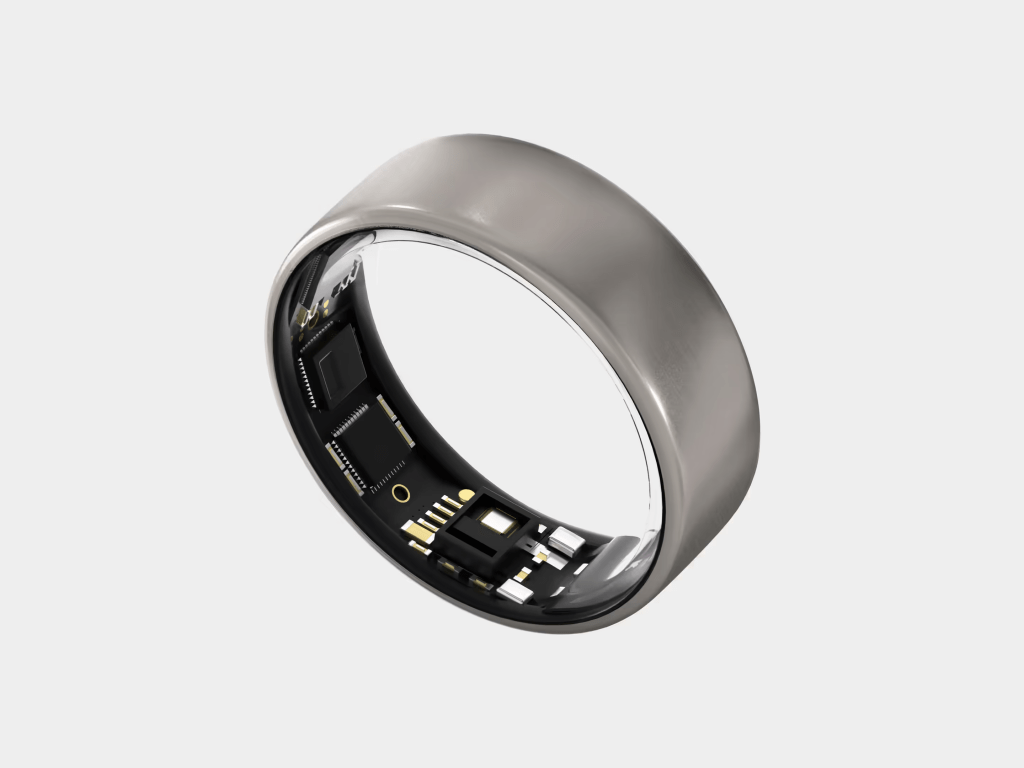

Let’s face it, all of these more premium style trackers are going to be offering the same data. Things like sleep tracking, heart rate variability, physical activity, temperature and an app that helps make sense of the data. The thing with the Ultrahuman that is making it stand out from the OURA ring is the fact that it is a one-time fee.
That’s right. Just buy your ring, and you gain access to some of the most advanced tracking available. Here’s a quick comparison table for you to understand the key differences between the OURA ring, Ultrahuman, and Luna Ring.
| Feature | OURA Ring 4 | Ultrahuman Ring AIR | Luna Ring 2 |
| Starting Price | $349 (Check Price) | $349 (Check Price) | ~$300 (Check Price) |
| Subscription | $5.99/mo (Required) | None | None |
| Battery Life | Up to 8 Days | 4–6 Days | 5–7 Days |
| Thickness | 2.88 mm | 2.45 mm | 2.9 mm |
| Weight | 3.3g – 5.2g | 2.4g | 3g – 5g |
| Material | All-Titanium | Titanium | Titanium |
| Water Rating | 100m (10 ATM) | 100m (10 ATM) | 50m (5 ATM) |
| Unique Feature | Smart Sensing (18 paths) | Caffeine/Sun Windows | Luna AI Health Coach |
Again, as a personal trainer, I like these types of fitness trackers because I find the quality of the data is so much better. I have been a long-time Fitbit user, and now a Garmin customer, I know that the technology in wearables is constantly evolving to better support your healthy lifestyle.
The only real flaw I have heard about related to wearable rings is that they can sometimes be uncomfortable when you are doing exercises that require gripping a bar, handle, or dumbbell. I have not tried a ring myself (yet), but I wanted to point this out as that’s what I’ve heard from folks who have tried a smart ring.
Are Wearables Worth It for the Everyday Consumer
Now that I am no longer a personal trainer but a 9-5er who uses fitness trackers and apps to hold myself accountable and monitor my progress, I find I have a new appreciation for fitness trackers, but my perspective on them has changed as well.
For the majority of people, having a step counter will actually suffice as a first step into the world of wearables. And this isn’t to minimize people’s fitness goals, it is the truth. When I go see my friends for an event like a festival or after a big day of walking around the city, the number one thing people compare is their step count.
Step count is a simple way to see how active you’ve been throughout the day, and in a society that is increasingly sedentary, I genuinely believe that having a device with a fairly accurate step counter will do the trick. In the video below, you can see the creator test common fitness watches to see which one tracks 1,000 steps the most accurately.
From this video, you can see that the Pixel Watch 2 got the closest to the actual number of steps taken by the creator. It is worth mentioning that Google, who makes the Pixel watch, also purchased Fitbit, so I think both are good options if you’re looking for a wearable fitness tracker that will give you all the basic information you need, with a user-friendly dashboard in their app.
I was very close to buying a Pixel watch last spring when I was looking to replace my Fitbit Versa 2 that had been damaged. However, due to my budget constraints at the time, I decided to go with a Fitbit Versa 4 over the Pixel watch. And since losing my Fitbit a couple of months ago, I’ve upgraded to the Garmin vivoactive 6, which I have really been enjoying.
And again, as someone who is now uses these trackers to keep me motivated and data-driven at the gym, a wearable watch like the Fitbit, Pixel watch, Apple watch or the Garmin vivo series is great. They’ll track physical activity. They typically have different exercises you can track on the watch and in their app. They have great features like timers, alarms, and activity reminders, and tick all the boxes that the general population would look for in a fitness tracker.
My one pet peeve? Garmin has now introduced nutrition tracking – but it’s behind a paywall. There are other ways to keep track of my nutrition, but I wish I could track the basics with the standard app.
In conclusion: What Wearable is Worth it to YOU?
Wearables in the fitness industry really have changed the way we think about and track our health and wellness efforts. I think from both a personal trainer standpoint and from the perspective of someone who cares about longevity and health, the fact that we have these devices available to us is amazing.
I think with all technology and anything that stores data, we have to be mindful of the fact that major corporations have our health data, but if this is something that truly concerns you, then there are ways to protect yourself.
Which leads me to my concluding statement: wearables are worth it depending on the worth you place on having that data available to you.
For example, I really value having as much data as possible because I like the idea of fine-tuning my exercise, diet, sleep, etc. to see how it impacts my workouts. This is why the higher-end wearables with better tracking technology are worth the investment to me (when the budget is available). At the same time, buying the Fitbit versa 4 and the Garmin Vivoactive 6 were worth investing in, despite not having all the bells and whistles of the Ultrahuman Ring or WHOOP band, because I needed the basic data to keep me motivated when I was going to the gym.
If you are someone who likes the notification that says you’ve hit your steps or closed your rings for the day, then I do believe wearables are worth it for you. If you want to keep track of your after-work run to see if you’re getting faster or running farther, then again, these wearable fitness trackers are definitely worth it because they make tracking that so easy.
Regardless of where you are in your journey, wearables will always be an investment. So if we are talking about whether they are worth it or not, then it ultimately comes down to what worth do you give to your health data? My best friend is in great shape, stays active, eats well, and has never worn a wearable fitness tracker in her life. She just doesn’t put value in the data. Whereas I am the total opposite.
With that in mind, how do you value health data? Have you found that wearable fitness trackers help or harm your fitness goals? Let me know in the comments below! I’d love to hear your thoughts on this.


 Riley Pearce