

*Notice: This article briefly discusses eating disorders and sexual assault. If you find this content triggering, please consult your loved ones or resources available to you. Sending you love.
Affiliate Disclosure: Please note that this article contains affiliate links. This means that if you click through the links and make a purchase, I may earn a small commission from that purchase at no extra cost to you. To learn more about affiliate marketing and how I use the income from affiliate inks, check out my affiliate page.
I find it a little sad that we have vilified fat in our society. Using it as an insult, producing fat-free foods and fat-blasting workouts. The truth is that fat is vital to our survival. Both the fat content in food and the fat cells in our bodies.
In this article I hope to, at the very least, shed a positive light on fat. There’s already too much discourse that makes people feel shame for carrying more fat on their bodies and makes them fear foods that have a high fat content.
For women this is truly disheartening. Let me lay out some facts for you about women’s bodies and our relationship with fat:
- Women cannot have low body fat percentage like men. In physique competitions, men can get down to about 4% at their stage weight. If women go below around 12%, we lose our periods and it can impact all of the systems that are tightly linked to our menstrual cycle (which is almost all of them).
- The fat deposits in our body all have similar jobs, but they are also all specialized. In Cat Bohannon’s book, Eve, she explains that the fat in our hips and thighs has specialized fatty acids that helps with the development of a baby’s brain. Remove that fat, or deposit fat from other areas of the body and you risk the normal development of the baby’s brain.
- She also mentions that it is very common for women who get liposuction surgery to see stubborn fat deposits in their upper arms appear after the surgery.
We have fat for a reason so messing with it, removing in a traumatic way like surgery or desperately trying to avoid having fat on your body will ultimately lead to a body that is trying to find ways to recover the lost contributions of the fat on our body.
Now, before I go any further I do want to acknowledge the very real reality that tipping into morbid obesity, where the body has much more fat than it needs can be lead to cardiovascular complications, impact joint health and lead to serious self-esteem and mental health struggles.
With that, I also want to acknowledge that the world is a really judgemental and sometimes scary place for women. If we were alive during the roman empire, having a voluptuous figure would be deemed a sign of wealth. Marilyn Monroe’s curves added to her appeal, and even today we are being told that a flat stomach but a curvy, BBL bum is the ideal body.
All of these mixed messages and moving targets can impact women’s mental health and lead to mental health disorders like Anoriexia, Bulimia, Orthorexia, and Binge Eating Disorder. I am also keenly aware that some women’s bodies will create a suit of armour of fat after experiencing sexual trauma. So we can never judge someone for having very little fat on their body or having more fat on their body. If you are struggling with an eating disorder or are in crisis, please consult the resources here (ED) and here (SA).
Fat’s Jobs: A Review
One of the reasons I get my knickers in a knot when people are hating on the fat on their body or the fat in foods is that fat has so many important jobs in the body. For starters, fat in food is the most calorically dense macronutrient in our diets. Carbohydrates and proteins offer us ~4kcals/g, whereas fats offer us 9kcals/g.
That’s twice as much energy for the same amount of food. When our ancestors were roaming the plains and desolate landscapes of the past, finding something with a high fat content meant requiring less of that meal to gain the same amount of energy. This is crucial for survival, and is likely why we have systems that depend on fat.
Fat in food also provides flavour. Flavour is crucial for the more modern experience of eating. Having something that tastes good can impact how satisfied we feel after a meal. More importantly, when we remove fats, we have to substitute the flavour with the next biggest provider or flavour – sugar and fat.
I will always live in a low-level-burning disdain for the famous harvard research paper that was published and paid for by the sugar industry that vilified fat in the 80’s. This led to the removal of fats from all products, meaning sugars, sugar alcohols, and modified fats had to step in to make sure food still tasted good. Which ultimately led us to the obesity epidemic of the 21st century.
Job 1: Vitamin Absorption
As briefly mentioned before, consuming adequate fat in our diet is important for difference processes in our bodies. Most importantly, fat is required for the absorption of key vitamins. Vitamins A,D,E,K (I remember by just thinking ADEK) all require the precense of fat in order to be absorbed into the body. Without fat, you cannot absorb these vital vitamins.
I find it helps to understand just how important a vitamin is by looking at what a deficiency in that vitamin leads to. So let’s review those:
Vitamin A Deficiency
The cleveland clinic lists the following as symptoms of vitamin A deficiency

As you can see, by not having enough vitamin A in your diet, you can have issue with eyesight, your skin (the largest organ of the body), fertility, and your immune system! So not only should you make sure you have adequate vitamin A in your diet, but make sure you are consuming those sources with a high quality fat source. My personal recommendation is always liver pate. It has a natural high fat content and is one of the best sources for available vitamin A.
Vitamin D Deficiency
If you aren’t on the vitamin D train, then you may be one of the fortunate people who live somewhere that sees the sun year round. As a northerner, vitamin D supplementing is crucial. Our bodies will naturally produce vitamin D when exposed to the sun. In the summer, a few minutes in the sun can produce enough vitamin D to keep our bodies healthy for weeks (depending on melanin content in your skin).
Vitamin D is so important is exists in a very special vitamin/hormone category. It impacts so many systems in the body that scientists recently gave it the hormonal classification to highlight just how important this vitamin is in maintaining a healthy body.
With so many jobs, you can imagine the symptoms of vitamin D deficiency are serious. Yale Medicine lists the following as symptoms of vitamin D deficiency:
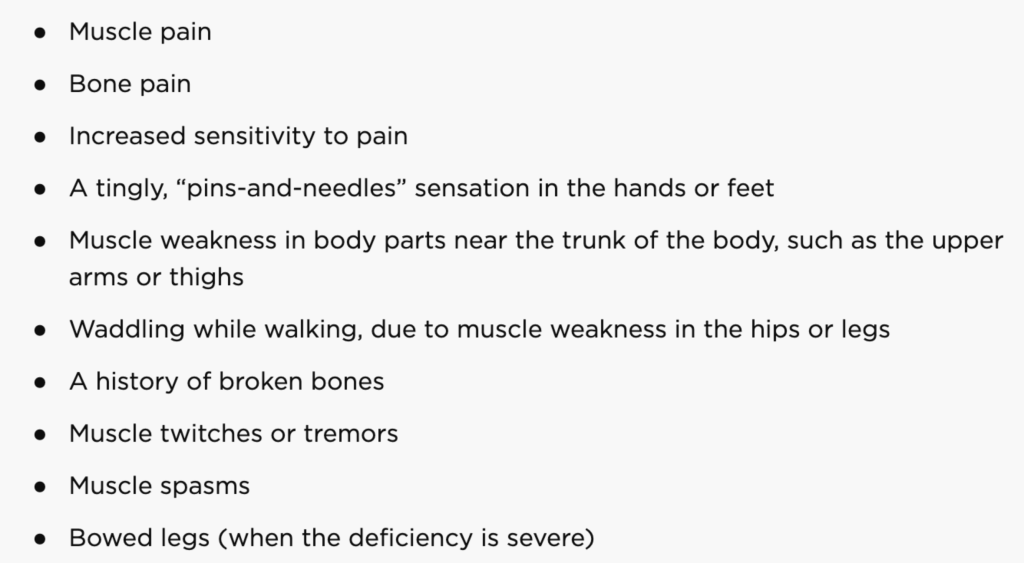
Essentially the body starts to break down, makes you very fragile and potentially immobile. So again, make sure you are consuming high enough quantities of fat to be able to absorb vitamin D supplements. And if supplementing isn’t you thing but you also live in the north like me, don’t worry. Nature always takes care of us! You can find high quantities of bio-available vitamin D in fatty fish like salmon, mackerel, and sardines (are we surprised it exists in fatty fish – no).
Vitamin E Deficiency
Truthfully, I don’t think about vitamin E all that often. Unless I have an cut or something that needs to be healed, I don’t think about vitamin E, but that doesn’t negate it’s importance in our body. In fact vitamin E is an important vitamin for our immune system, which is a world that is increasingly exposed to viruses and a more toxic environment, having a strong immune system is crucial.
Medical News Today lists the following as symptoms of vitamin E deficiency:
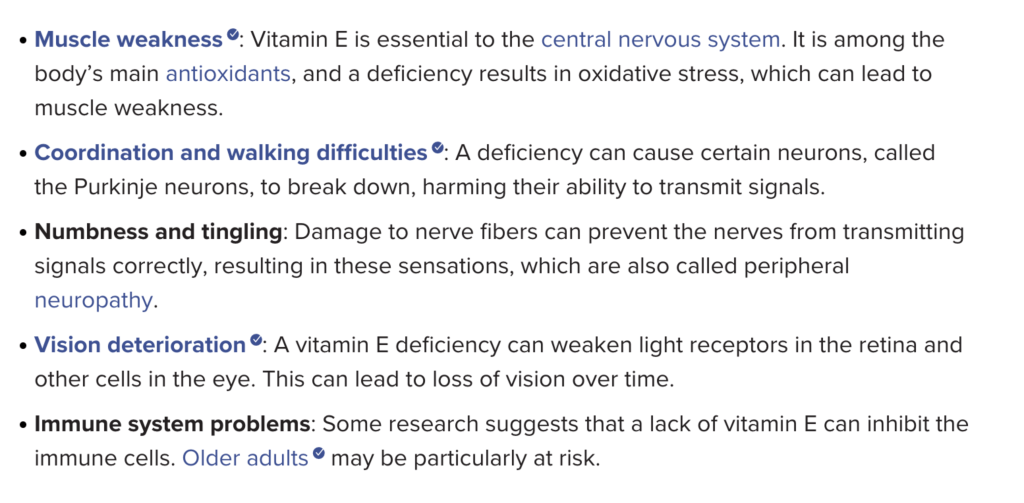
The thing that really sticks our here, besides the impacts on the immune system, is the impact to our central nervous system. Our central nervous system is the operating hub of the body. Nothing happens without the central nervous system’s input, so it is always important to protect this at all costs.
To consume both adequate, health fats and vitamin E, add more of the following to your diet:
- avocados
- peanuts and peanut butter
- almonds and almond butter
- sunflower seeds and sunflower oil
- and wheat germ oil
I hope you are seeing the trend that the foods with the highest content of these fat soluble vitamins are also natural sources of healthy fats. Funny how nature works like that ;)
Vitamin K Deficiency
Vitamin K is similar to vitamin E in that I don’t think about it all that often, but it is quietly doing it’s very important job and keeping me alive everyday. One of it’s most important jobs in the body is to help blood clot. Without sufficient vitamin K, we would simply bleed our every time we got a cut. For women, this is exceptionally important as we have our menses.
When we are deficient in vitamin K, the symptoms include loss in bone density, leading to risk of osteoporosis, bleeding disorders, and risk for cardiovascular disease.
Vitamin K is one of the vitamins in the fat-soluble vitamin category that is actually found in its highest concentrations in plant foods. Foods like kale (443% daily value/half-cup), mustard greens (346% daily value/half-cup) and Swiss chard (332% daily value/1 raw leaf) provide more than enough vitamin K in reasonable quantities. You can also find it in beef liver, pork chops and hard cheeses, but it will require more than 200g of each to achieve your daily recommended value of vitamin K. With that said, all of the plant-based sources are typically prepared with some form of oil or paired with a high-fat meat or nut to ensure you have enough fat to absorb the vitamin K.
Job 2: Insulation
Humans are warm-blooded mammals, meaning our blood and internal temperatures are kept warm by a myriad of processes and must be kept within a very specific temperature range in order to keep things hunky-dory. And that range is incredibly delicate. An internal body temperature of 36.1 degrees celsius (97F) to 37.2 degrees celsius (99F) is considered healthy.
When we get a fever, our body has increased the temperature to make the body a more hostile environment for whatever virus or pathogen has invaded the body. The higher temperature is meant to kill the pathogen, but also makes us feel pretty awful.
Our body temperature dropping below the normal level is also dangerous. Hypothermia is a prime example of what happens to the body when the core temperature drops below our normal set temperatures. Organs begin to fail and the body just simply cannot function properly, and it could lead to death.
Think about the other mammals that live in cold climates. Polar bears, beluga whales, and penguins. They require a thick layer of fat to survive those frigid temperatures. Our bodies also adapted to store fat on our bodies to ensure we remained insulated during the colder months.
I will write a completely separate blog about working with your ancestry to achieve optimal health, but this is a good moment to dip our toes into that world. If your ancestors evolved in the northern or deep southern hemisphere (more southern Argentina, than Australia), then your body is likely very good at storing fat.
Using myself as an example, my lineage is full of Irish potato farmers, Norwegian vikings, with some german and dutch influences. My ancestors would have had to endure cold, darker months and therefore adapted to store fat efficiently. This is why I feel like I can eat a cookie and see the difference on my body, whereas my friends with a Mediterranean background, and therefore from warmer climates, can consume breads and high fat foods and maintain a lean figure.
Our genetics are just different, and that’s beautiful.
Fat is not a good conductor of heat, so all of the heat that in primarily carried through the bloodstream is insulated by the fat tissue that we develop just below the skin. It is important and plays a very important role in keeping us healthy. This is why we must always maintain some amount of fat on our bodies to be healthy.
I use this understanding of fat as an insulator to guide my nutrition and training choices during the colder months of the year. Understanding that I have more fat on my body, I also know that I have this extra layer of stored energy on my body, ready to be used towards higher intensity workouts. Which is a perfect segue for the fat’s 3rd job!
Job 3: Energy Storage
As I mentioned previously, when we consume foods high in fat, every gram of fat in that food provides us with 9 kcals (Calories). Calories are simply a measure of energy, and so by having fat on our bodies we have stores of fat just waiting to be used in times of food scarcity.
In today’s day and age, and in the western world, food scarcity is found in low income zones. But the majority of us have ample access to food, which is why having extra fat on our body feels like a bad thing.
We have all of this stored energy on our bodies from overconsumption, and we’ve created environments that make our bodies go into energy-storing mode, so it becomes very difficult to shed unwanted pounds. Again, our bodies are operating on an ancient operating system. So if we give it extra calories it is storing those calories in anticipation of food scarcity. Our body will also store fat when it is under stress as the energy stored in our fat deposits can also store other helpful hormones that would have helped us fight or flee from ancient threats.
We are in a vicious cycle at the moment, and unfortunately living in a capitalist society means that we will continue to be marketed to and will have our ancient drive to eat used against us to put money into the pockets of food manufacturing companies.
Again, I could go deeper into this but I’ll move on and get back to the positive side of this – which is the fact that our body is great and “saving some for later”.
As I mentioned before, I know that in the winter time, given my genetics and the environment I live in, my body is going to naturally store more fat. I could eat the same diet, but because my body has the signal of colder weather and likely less physical activity because of the colder weather (fewer hot girl walks in the winter), my body is going to make sure more of the energy from the food I consume is store away in fat tissue to make sure I have enough energy to survive the winter.
In the past the winter would have also been a time of scarce food sources, so this natural response to store energy is another example of how our bodies take such good care of us. I always try to make sure I show my body gratitude for continuing to support me and take care of me without me trying.
All this in mind, with more energy stored in my body, I can apply this to my modern life. In the winter time I always like to switch into a strength and hypertrophy program. As I mentioned in this article, strength training requires a lot of energy because you are not only drawing on energy resources in the muscles, but also from the brain as well. So when I am doing my fasted strength workouts in the mornings, I know that my body has the resources to support the workout because my body has stored yesterday’s meals in fat tissue.
Maybe it is because I am such a lover of the human body, but I am getting emotional writing this and hopefully helps drive home the whole point of this article, which is to make sure you understand that fat is important.
On the flip side of this, in the summertime, my body is naturally going to not hold onto as much fat. There is no need to insulate since the temperatures are much higher here in the summertime. So I find myself doing more cardio and HIIT style workouts that still draw on fat storage, but are using leftover calories from yesterday’s dinner to power the workouts. I will also be more inclined to have a small snack before the gym in the summer because there’s less fat to draw on for energy.
Job 4: Hormone Production and Hunger Regulation
For the fourth and final job of the fat on your body, I want to make sure this is framed properly. I have mentioned before that in the western world we live in a society that is constantly marketing crave-able foods to us and has created an environment that is very high stress. Both of these factors have led to a society where we are ignoring satiety signals from our body and are also coping with stress by eating more.
I feel the need to mention this because you may not believe that fat actually produces a hormone called leptin, which, when normally circulating the body, tells the brain that we are full. We are satiated when enough leptin circulates the body. It’s job is to tell the brain “that’s enough” which, under normal circumstances, should make us want to stop eating.
In a normal world, where our only stressors were social and when we came across a bear in the woods, this hormone would operate as expected. However in our world, where marketing messages of “treat yourself” and “you’re not you when you’re hungry” are constantly bombarding us, it has become incredibly common to be leptin resistant.
Leptin resistance is when our brains just simply decide to ignore leptin trying to tell us that we are full and it is time to stop eating. There are programs supported by registered dieticians to help with leptin resistance, but untreated, this can lead to metabolic disorders and obesity.
The final job of our fat is to help us control our hunger and food intake, and yet we’ve created a society that has made this job null and void and has resulted in harmful levels of fat on that body. Fat that cannot do it’s job’s as nature intended.
I don’t want to write this final section to make you feel helpless. In fact, I hope this helps you feel more empowered (knowledge is power!). If you can understand that companies are trying to make money from you buying their high sugar/high salt/high processed fat foods, knowing that your brain will crave more of it, you can start to make informed choices about the food you consume and help your body return to it’s normal levels of fat and responding to leptin again.
I hope that this article has helped de-vilify fat. It has so many important, life saving jobs and so to write it off as the ultimate evil is to miss out on all of the benefits it provides you with as well. If you have any questions or comments about this, please leave them in the comment section below.
 Riley Pearce
3 thoughts on “Why Do We Have Fat?”