
It is amazing the technology that we have access to these days. I can remember years ago when Sidney Crosby got a really bad Achilles tendon injury and the speed that he recovered seemed like a miracle at the time.
Back then, only elite athletes had access to the best recovery technology and medicine. But in 2026, we’re now gaining access to elite-athlete-level resources.
From IM8’s game-changing daily supplement, to Youth & Earth’s liposome-delivered longevity supplements, to Plunge’s at-home contrast therapy solutions, we can train, fuel, and recover like the best of them.
My latest research into all things health, wellness, and recovery has led me down the path to red light therapy. Red-light therapy masks still don’t have me fully convinced, but recently, Kala Light Therapy announced their official partnership with Team Canada as their official recovery partner.
If they have passed the test to be the official recovery partner of Canada’s best winter athletes at the Winter Olympics, then there must be something to them.
In this article, I am going to go through the latest research on Red Light Therapy (RLT), technically known as Photobiomodulation (PBM) for athletic recovery, and then see if Kala really is the best option out there for your recovery needs.
The Science behind Red Light Therapy for Athletic Recovery
At its simplest, RLT is the use of specific wavelengths of light. In most clinical studies, the wavelengths used are red (630–660nm) and near-infrared, or NIR (810–850nm), to trigger biological changes in your cells.
Unlike the UV rays from the sun that burn your skin, or the blue light from your phone that disrupts your sleep, these specific red and NIR wavelengths can go deep into the tissue to work their magic. They don’t work by heating you up; they work by powering you up at a cellular level.
The Key: Your Mitochondria andATP Synthase
To understand why an Olympic skier, speedskater, or a gal like you and me would use RLT, we have to look at the mitochondria, “the powerhouses of your cells”.
For decades, the mainstream theory was that red light worked by unclogging a specific enzyme (Cytochrome c Oxidase) from Nitric Oxide. While that’s part of the story, recent breakthrough research published in Annals of Translational Medicine suggests a much more fascinating mechanism.
The “Water Lubricant” Discovery
It turns out that the primary target of red and NIR light isn’t just a protein; it’s the Interfacial Water Layers (IWL), the tiny layers of bound water that coat the surfaces inside your mitochondria.
Under normal conditions, this water is thin and slippery. But when you are under intense physical stress, injured, or aging, your cells produce reactive oxygen species (ROS). These ROS make the bound water coating the surfaces in your mitochondria thick and viscous. It’s like maple syrup turning to molasses.
The 9,000 RPM Motor
Inside your mitochondria sits a literal nanoscopic motor called ATP Synthase. This motor has to spin at a staggering 9,000 RPM to produce adenosine triphosphate (ATP), the fuel your muscles need to contract and repair.
Related Reading: Beyond SPF: Can NMN Protect Your Skin From the Inside Out?
When the water surrounding this motor becomes thick and molasses-y due to oxidative stress:
- The motor slows down. It simply can’t spin efficiently against the viscous fluid.
- ATP production drops. Your recovery stalls, and fatigue sets in.
The RLT “Oil Change”
When you hit your cells with the high-intensity light from an RLT panel, the photons interact with those water layers. The light reduces the viscosity of the water, instantly thinning it out.
The Result: The ATP Synthase motor is once again lubricated, and the motor of the mitochondria can spin back up to its 9,000 RPM capacity. This then floods your cells with fresh energy (ATP) almost immediately.
The “Light-Cell-Pump” (Why Pulsing Matters)
Sommer’s research also highlights why pulsed light is so effective. Rather than just a constant beam, pulsing the light creates a transmembrane convection effect, which is essentially a light-cell-pump.
In the dark microseconds between light pulses, the cell absorbs nutrients and expels metabolic waste more effectively. For an athlete, this means faster lactic acid clearance and quicker nutrient delivery to torn muscle fibers.
Translated into simple terms: your muscle soreness after the gym will be greatly reduced if you introduce red light therapy into your recovery routine.
Essentially, RLT isn’t just offering a quick recovery solution; it’s performing a high-speed oil change on your cellular engines, allowing them to run at peak Olympic capacity.
The Athlete’s Prescription: Wavelengths and The Goldilocks Zone
In the world of RLT, not all lights are created equal. To see the benefits found in clinical studies, a device must hit three critical benchmarks: wavelength, irradiance, and dose.
The Wavelengths
Research consistently points to two goldilocks zones in the optical window:
- 660nm (Red Light): Best for skin health, superficial collagen, and wound healing.
- 850nm (Near-Infrared): Best for deep muscle recovery, joint pain, and even bone density, as it can penetrate up to 5–10cm into the body.
Irradiance (Power Density)
This is the most important spec. Irradiance, measured in milliwatts per square centimeter (mW/cm^2), tells you how concentrated the light is. If the irradiance is too low, you’d have to stand in front of the panel for hours to get a therapeutic dose.
The Research Target: For deep tissue recovery, athletes look for devices that deliver more than 100 mW/cm^2 at a distance of 6 inches.
The Dosage (Joules)
Dosage is a calculation of intensity over time. For muscle recovery, the Goldilocks zone is generally 10 Joules per centimeter squared to 60 Joules per centimeter squared.
- Too little: No effect.
- Too much: You can actually “over-stress” the cells, a phenomenon called the Biphasic Dose Response, where the benefits start to disappear.
How RLT Impacts Women Who Workout
While RLT is great for everyone, it offers specific benefits for women managing the demands of regular exercise, hormonal shifts, and long-term health.
Hormonal & Adrenal Support
Intense training can spike cortisol (the stress hormone). Research suggests that RLT can help modulate the HPA axis, potentially lowering systemic inflammation and helping the body transition from a fight or flight (sympathetic) state to a rest and digest (parasympathetic) state. This is crucial for avoiding burnout.
Thyroid Health
Many women struggle with subclinical hypothyroidism, which can lead to fatigue and slow metabolism. Studies have shown that applying NIR light to the neck can improve mitochondrial function in the thyroid gland, supporting better T3/T4 hormone conversion.
Bone Density
As women age, bone density becomes a primary concern. RLT stimulates osteoblasts (bone-building cells) and increases collagen production within the bone matrix. For women lifting heavy weights, RLT can help support better bone density, a common concern for women as we age.
The Skin-Performance Bonus
Let’s be honest: recovery is the goal, but the glowy collagen boost is a nice perk. RLT reduces the appearance of fine lines and helps with exercise-induced redness by calming the skin’s inflammatory response.
The Kala Audit: Do They Meet the Standard?
Now, for the big question: Is Kala Therapy worth the hype, or are they just riding the Olympic coattails? We looked at the specs of their flagship Kala Elite and Kala Pro panels.
| Feature | Research Recommendation | Kala Elite Specifications | Verdict |
| Wavelengths | 660nm & 850nm | Dual-chip 660nm & 850nm | Match |
| Irradiance | $>100 mW/cm^2$ @ 6″ | $>161 mW/cm^2$ @ 6″ | Exceeds |
| EMF Output | Low / Negligible | 0.0 µT @ 4″ (Zero EMF) | Exceeds |
| Flicker | Flicker-free (for eye safety) | 0% Flicker rate | Match |
| Clinical Use | Pro-athlete grade | Official Team Canada Partner | Verified |
The Verdict on Kala
Kala isn’t just well-designed; it is high-output. Because their irradiance is significantly higher than that of many beauty-grade panels, an athlete only needs about 10 minutes to hit their dosage target for deep muscle recovery.
Their inclusion of pulse therapy (pulsing the light at specific frequencies) is also a feature often found in high-end clinical lasers, which some research suggests can help deeper penetration by allowing the tissue to “cool” for microseconds between light bursts.
Head-to-Head: Kala vs. Hooga vs. Shark
You’ve likely seen the Hooga Pro300 all over forums because of its price point, and the Shark CryoGlow mask on social media because your favourite influencer has been testing it recently. But how do they stack up against the Olympic-grade Kala Pro?
Comparison Table: Specs at a Glance
| Feature | Kala Red Light Pro | Hooga Pro300 | Shark CryoGlow Mask |
| Primary Use | High-Performance Recovery | Budget Targeted Recovery | Skincare & Anti-Aging |
| Wavelengths | 660nm & 850nm (1:1) | 660nm & 850nm | 415nm (Blue), 630nm, 830nm |
| Irradiance @ 6″ | >135 mW/cm^2 | 109 mW/cm^2 | ~2-7 mW/cm^2 (at skin) |
| Pulse Technology | Included (Pulse Recovery+) | No | No |
| Target Depth | Deep Tissue / Muscle | Deep Tissue / Muscle | Surface Skin / Pores |
| Credential | Team Canada Sponsor | Common Consumer Choice | Brand Recognition |
| Approx. Price | $799 CAD (~$590 USD) (Check Price) | $299 USD (Check price) | ~$349 USD (Check Price) |
The Verdict: Does Kala Meet the Science?
When we look at the comparison, the differences become stark.
The “Shark” Brand Recognition vs. Reality
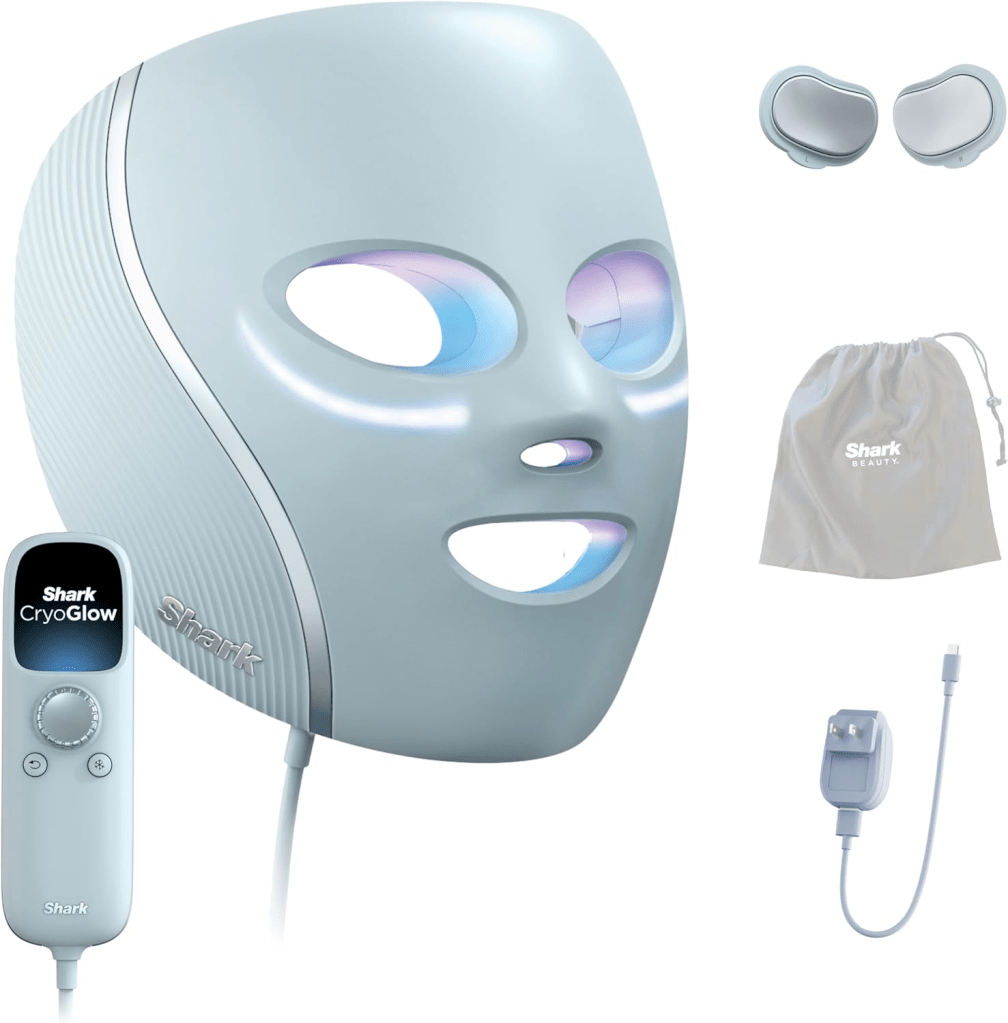
The Shark CryoGlow is a fascinating piece of tech, especially with its under-eye cooling pads. However, from a recovery standpoint for an athlete, it’s like bringing a water pistol to a house fire. The irradiance is significantly lower than that of a panel. While it’s great for acne (blue light) and fine lines (630nm), it lacks the power to reach a torn hamstring or a sore lower back. If you want skin benefits, Shark is fun; if you want muscle performance, it’s not the tool for the job.
The “Hooga” Forum Favorite
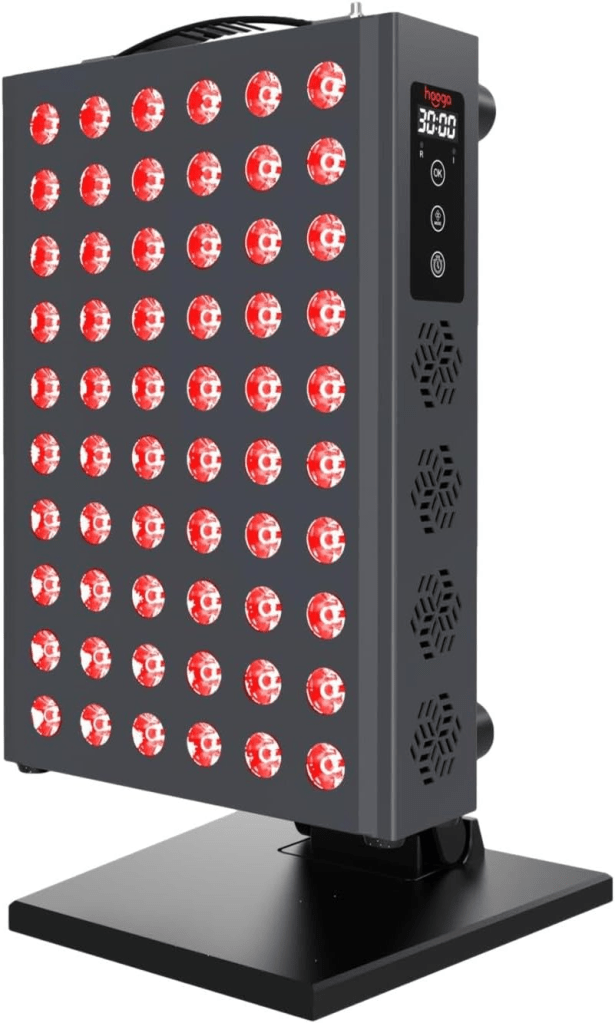
The Hooga Pro300 is the people’s champion. It hits the minimum clinical requirements (>100 mW/cm^2) and uses the correct wavelengths. For a hobbyist or someone on a strict budget, it is a very solid entry-level device. It does the job well, but it lacks some of the high-end refinements (like pulse mode and higher-density LEDs) that help shave minutes off a session.
Why Kala is the Olympic Choice
Kala doesn’t just meet the standards; it overbuilds them. The Kala Red Light Pro provides a massive irradiance of >135 mW/cm^2. This means that a 10-minute session with a Kala device delivers a better dose to your cells than a 20-minute session with lower-powered consumer panels.
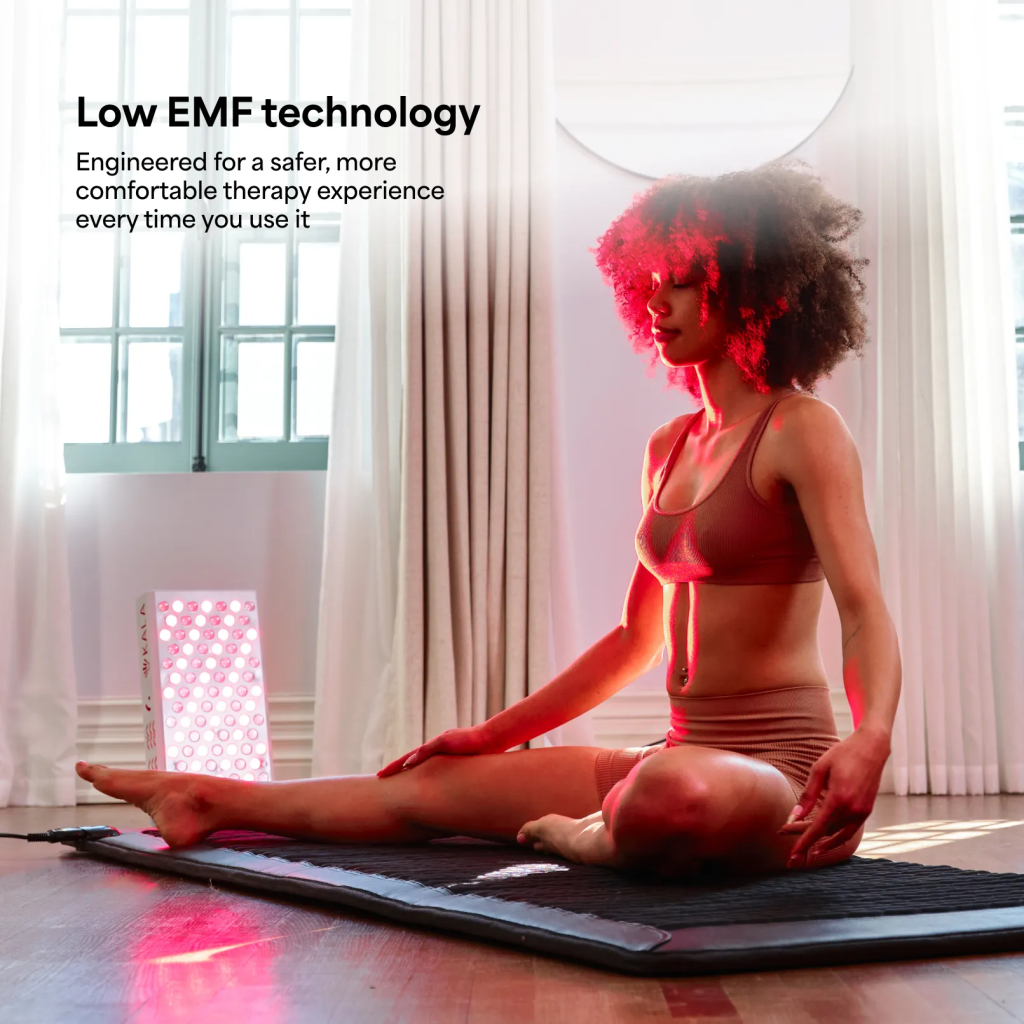
Furthermore, Kala’s inclusion of Pulse Therapy is a nod to advanced clinical research. Pulsing the light at specific frequencies can prevent thermal buildup in the tissue, potentially allowing for even deeper penetration without the risk of overstressing the skin. It’s that extra 5% of engineering that makes it suitable for an Olympic athlete who needs the most efficient recovery possible.
Final Thoughts
If you are like me and care about efficiency and the science behind the trendy new gadgets, the story here is clear: Kala has built a device that prioritizes power density. For the Canadian Olympic team, every second of recovery counts. They can’t afford to sit in front of a weak light for 45 minutes; they need a 10-minute recharge that is cell-deep that actually moves the needle on ATP production.
Kala’s range, including the portable “Kala Go” to the full-body “Elite”, seems to be one of the few consumer brands that actually respects the physics of light rather than just the marketing of wellness.



 Riley Pearce